Production processes built to support regulatory and statutory modelling can absorb a large share of actuarial process time: data preparation and quality checking, reconciliations, manual validation, analysis of change preparation, narrative reporting.
They sometimes rely on a stack of ageing tools (Excel, Access, VBA, SAS etc) and on largely manual processing, thinly documented and controlled after the fact. The quality and explainability required by regulation can sometimes suffer as a result.
Using AI is tempting, but it has to be done in a controlled way. The presentation first sets out the technical conditions for this: a parameterised process, an input data contract, an actuarial semantic layer and human validation.
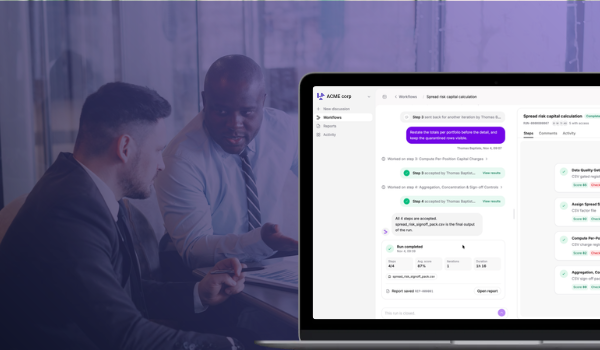
It then details the architecture: an orchestrator plans the tasks, generates and executes its own code, then submits each deliverable to a dual evaluation combining LLM-as-judge and deterministic business rules. Every run produces its own documentation and audit trail.
The approach was applied to several steps of this chain, as part of work for a UK life insurer, replicated for this study on synthetic data. The results show efficiency and quality gains at a low marginal cost: controls become continuous, and expertise becomes capitalised knowledge.
We conclude with scaling up (shared rules, tool rationalisation, governance) and the new roles of the actuary and the ultimate value for the organisation.
Who should attend?
Chief Actuaries, Heads of Actuarial Services and Actuarial Reporting, actuarial modelling leads, actuarial transformation and model governance leads, and risk and validation teams at life insurers and reinsurers.